Floral Anchor SVG Clipart Review
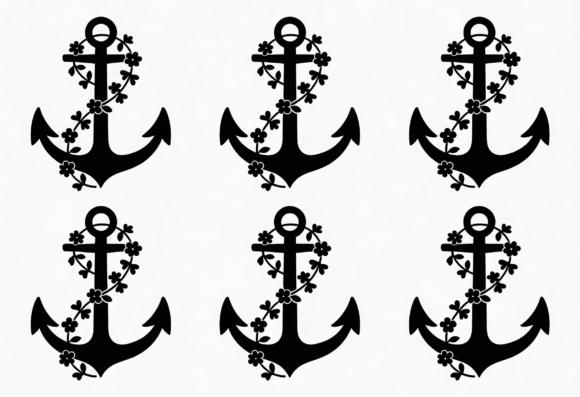
I have spent years reviewing digital assets for my embroidery business, and I know that a pretty image on a screen does not always translate to a beautiful stitched piece. When Floral Anchor SVG Clipart landed in my inbox, I didn't just look at the preview; I immediately started visualizing how it would perform under the needle of a commercial machine. As an experienced designer, my first impression is one of balanced elegance. The design strikes a mood that feels both nautical and garden-like, blending the sturdy structure of an anchor with the soft, organic flow of floral elements. It creates a visual personality that is perfect for boutique branding or personalized gifts, suggesting a project that is thoughtful rather than mass-produced.
From Screen to Stitch: A Real-World Scenario
Let's talk about a specific situation where this design shines. Imagine you are preparing a custom embroidered tote bag for a local craft fair or an Etsy listing. You need something that speaks to a customer who loves coastal living but also appreciates a touch of romance. Floral Anchor SVG Clipart fits this niche perfectly. Unlike a generic anchor symbol, the inclusion of flowers adds a layer of sophistication that elevates the perceived value of the finished product.
I ran a mental simulation of stitching this onto a heavy-duty canvas tote. The anchor provides a solid focal point, while the floral details soften the edges. If you were selling these bags as wedding favors or bridal shower gifts, the imagery resonates well with themes of "tying the knot" and new beginnings. However, if you plan to use this for a sweatshirt embroidery project, the layout needs to be considered carefully. The vertical orientation of an anchor works best on the chest area of a hoodie or centered on the back of a jacket, whereas the same design might feel too tall for a small cap patch without resizing.
Performance on Various Fabrics and Products
The versatility of Floral Anchor SVG Clipart depends heavily on the substrate. In my experience testing designs for various handmade products, the clarity of the lines is crucial. On smooth fabrics like cotton twill or denim, the design should hold up well, provided the stitch density is appropriate. For a kitchen towel or tea towel, which often features running stitches or simple fill areas, this design could add a charming decorative accent that customers love to display.
However, not every surface is suitable. If you are working with textured fabrics like bouclé or heavy wool, the fine details of the flowers might get lost in the weave. Similarly, stretchy fabrics such as jersey t-shirts require a stabilizer strategy that prevents puckering, especially around the curved parts of the anchor. While the design looks crisp in vector form, real-world embroidery involves thread tension and fabric movement. I recommend testing this on scrap fabric first to ensure the floral loops do not collapse during the stitching process.
For those creating embroidered patches, this design offers a strong silhouette. The anchor shape naturally lends itself to a satin stitch border, which helps define the edges against a background. Yet, if you intend to sell these as part of a commercial embroidery line, you must verify the licensing terms regarding the final physical goods. Some digital assets allow personal use but restrict commercial resale, so checking the file documentation before mass production is essential.
Navigating Technical Challenges
Even the most beautiful embroidery file can fail if technical constraints are ignored. One common pitfall with designs featuring intricate details like flowers intertwined with an anchor is the issue of tiny lettering or very small gaps between elements. If your target audience includes children's clothing, such as baby embroidery projects, you must ensure there are no loose threads that could pose a snagging hazard. Dense stitch areas within the floral center might cause the fabric to pucker if the wrong type of stabilizer is used.
When working with dark fabric, the contrast becomes a major factor. If the design relies on thin white lines for the flower petals, they may disappear against a black or navy background. In these cases, using a contrasting thread color or adding a light-colored backing layer (underlay) can save the design. Conversely, on light fabrics, the design will pop, making it an excellent choice for holiday embroidery gifts or summer-themed apparel.
Hoop size is another critical consideration. Floral Anchor SVG Clipart likely has a specific aspect ratio. Attempting to force a tall design into a small hoop can result in cropping or distortion. For larger projects like blanket embroidery or pillow covers, you have more freedom to adjust the scale, but for smaller items like caps or aprons, precision is key. Always inspect the small details in a monochrome mockup before sending the file to the machine; sometimes colors hide alignment issues that become obvious once the thread is actually laid down.
Visual Appeal and Brand Consistency
From a marketing perspective, the quality of the digital embroidery file directly impacts customer trust. A clean, professional-looking stitch pattern suggests that the maker cares about the details. When a customer sees a well-executed custom apparel item featuring Floral Anchor SVG Clipart, they associate that quality with the brand behind the shop. This is particularly important for Etsy sellers and small shop owners who rely on word-of-mouth and repeat business.
The design's aesthetic also influences its giftability. A cohesive image that blends nature with maritime themes feels timeless, making it suitable for year-round sales rather than just seasonal spikes. Whether it is being used for a tote bag design or a patch, the visual harmony ensures the product stands out in a crowded marketplace. For creative entrepreneurs looking to expand their inventory, having reliable design assets like this allows for consistent branding across different product lines.
Practical Designer Notes for Success
Before committing to a full production run, I advise taking a few practical steps. First, review the stitch density settings in your digitizing software. High-density fills can create a stiff hand feel, which might be undesirable for a soft baby garment. Second, test the design in both black and white to check for balance. Third, confirm whether the file supports the specific format required by your machine, though modern machines handle standard formats well.
Always check the thread colors you plan to use. Complementary colors between the anchor and the flowers can enhance the depth of the design. Finally, remember that while the file comes in multiple formats like SVG and EPS, the actual outcome depends on your machine calibration and stabilizer choice. By treating Floral Anchor SVG Clipart as a tool for problem-solving rather than just a decoration, you can create finished products that are durable, beautiful, and ready for the market.